In a context where reducing CO₂ emissions is becoming a priority for all industries, some companies stand out through concrete, measurable, and consistent actions. Univerre is one of those players that not only follows the trend but establishes itself as a true benchmark in sustainability.
For several years, the company has structured its environmental approach around a clear objective: reducing its carbon footprint at every stage of its operations. This positioning is not based on a single initiative, but on a comprehensive vision that integrates industrial processes, energy, logistics, and materials.
CO₂ reduction integrated at every stage
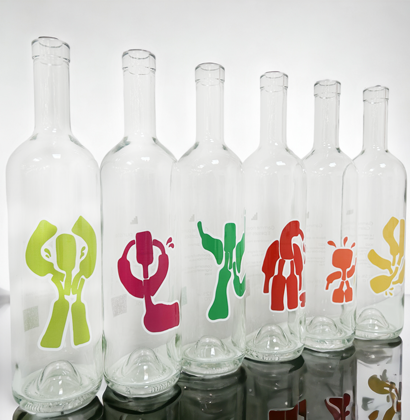
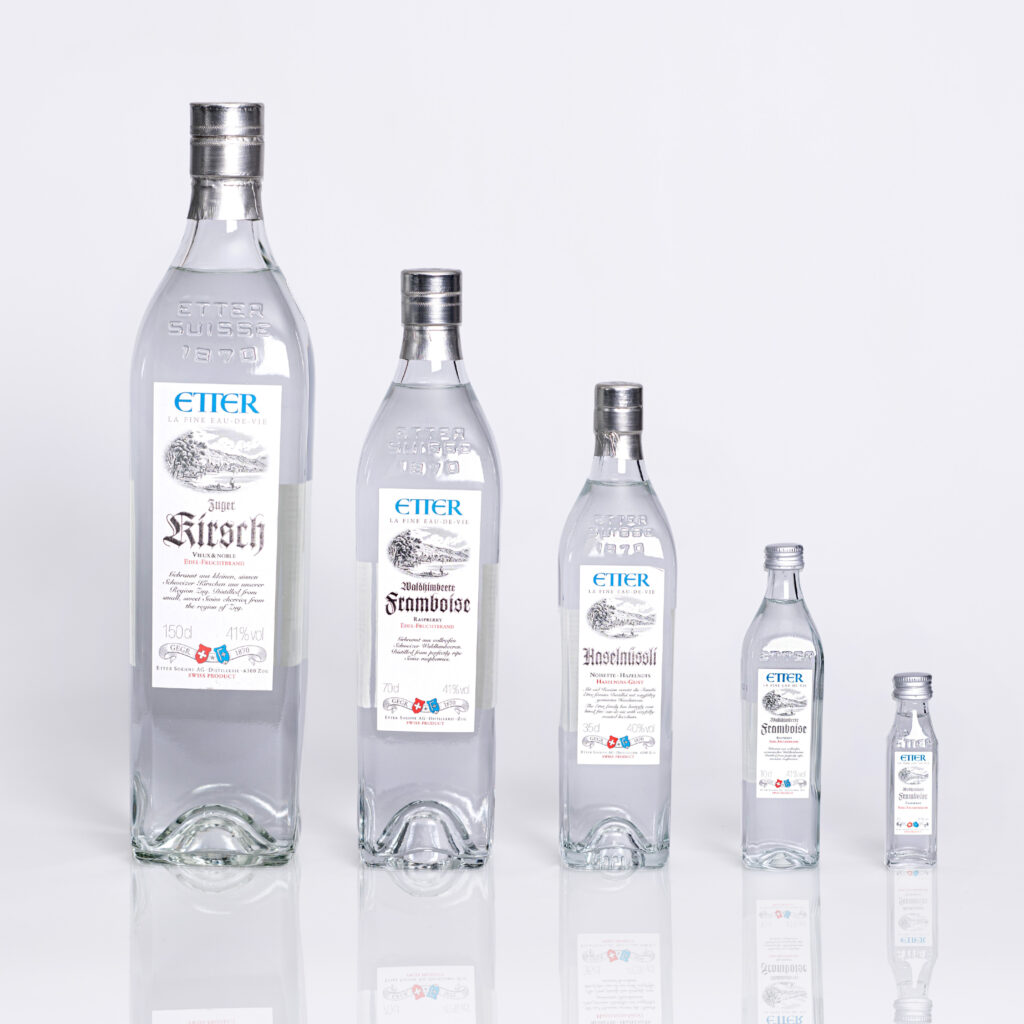
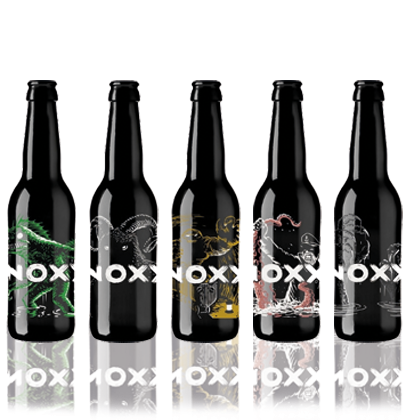
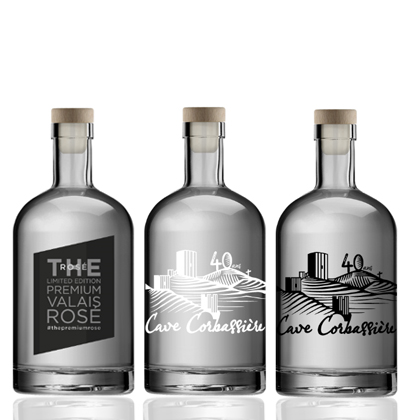
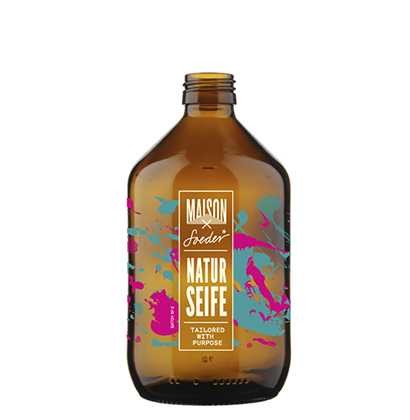
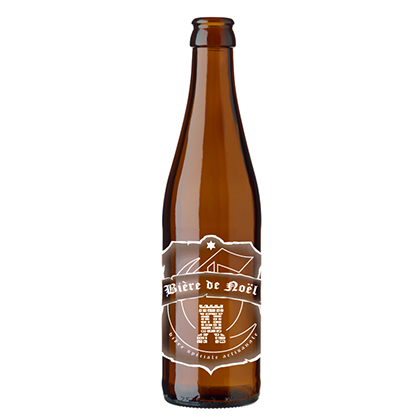
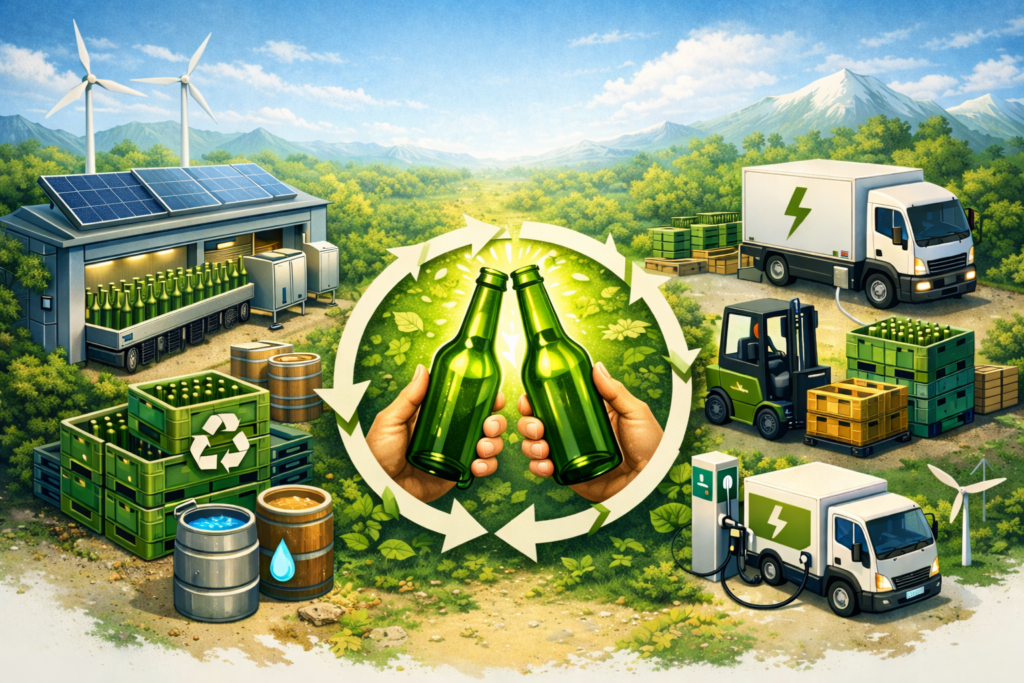
What sets Univerre apart is its ability to act across its entire value chain. Bottle washing itself is a major lever for reducing emissions. By enabling the reuse of glass, the company avoids the production of millions of new bottles, drastically reducing the energy required and the associated emissions.
This model fully aligns with a circular economy approach, where each bottle goes through multiple life cycles before being recycled. By limiting the extraction of raw materials and energy-intensive manufacturing processes, Univerre significantly reduces the overall environmental impact of the glass industry.
But the commitment does not stop there. The washing center is powered by solar panels installed directly on-site, making it possible to cover all energy needs with a renewable source. This partial energy autonomy strengthens the consistency of the environmental approach and reduces dependence on fossil fuels.
In addition, the continuous optimization of washing processes—particularly in terms of water and product consumption—further improves the system’s overall efficiency. This transition toward cleaner energy and more efficient operations is part of a long-term strategy, where each improvement contributes to a lower and more sustainable overall impact.
Rethinking logistics to limit environmental impact
Reducing CO₂ also involves transforming logistics flows. Univerre has chosen to progressively integrate more environmentally friendly transport solutions, notably through the introduction of electric trucks for deliveries, while also requiring its partners to adopt similar vehicles.
On-site, handling operations are carried out using electric forklifts, reducing direct emissions and improving the overall environmental quality of operations. Every detail matters, and it is precisely this accumulation of consistent decisions that leads to tangible results.
Less waste, smarter use of materials
Univerre’s approach is not limited to energy and transport. It also extends to material and waste management. By offering reusable returnable crates, the company eliminates the need for single-use cardboard, significantly reducing waste generation and the footprint associated with packaging. This choice not only limits the volume of waste produced but also reduces the costs and resources required for producing and processing disposable packaging. It reflects a pragmatic approach where economic performance and environmental responsibility go hand in hand.
This system is part of a closed-loop model, where resources are used optimally. Bottles, crates, and even certain elements of the washing process are designed to be reused, recycled, or recovered—such as the washing soda, which is continuously filtered and reused, and wine capsules, which are carefully sorted and then recycled. This comprehensive approach extends the lifespan of materials while minimizing losses and waste. By integrating these principles at every stage, Univerre demonstrates that environmental constraints can be turned into opportunities for sustainable innovation, while strengthening the consistency and efficiency of its operations.
Concrete savings thanks to our sustainable energy commitments
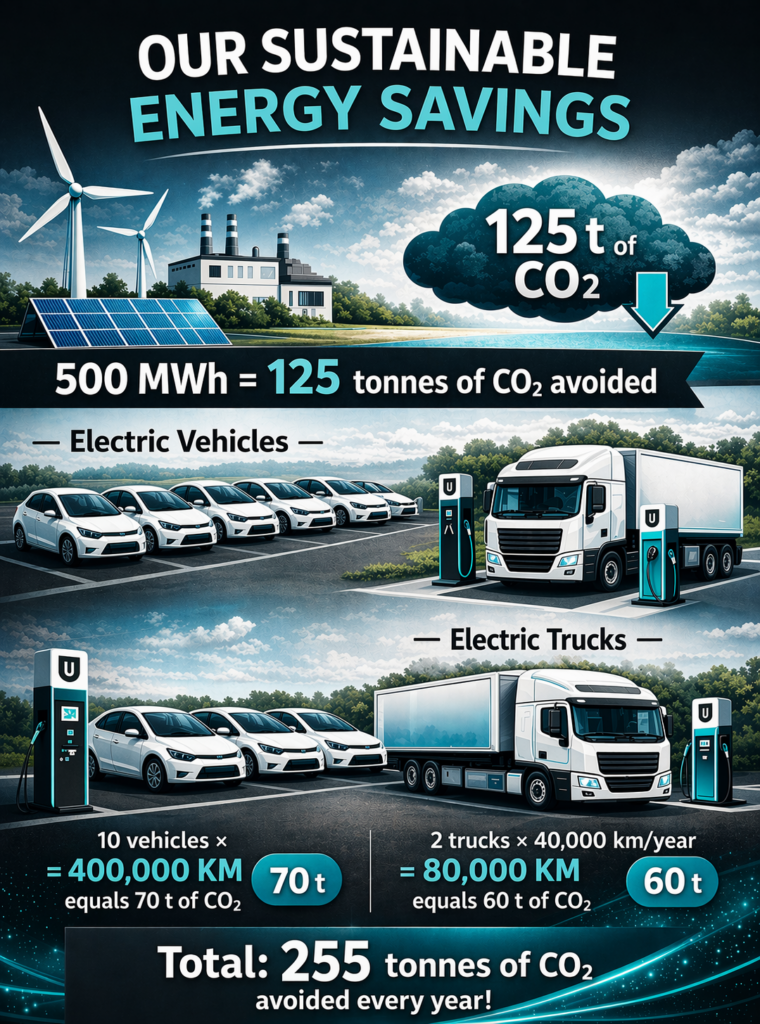
Thanks to the initiatives implemented in the field of sustainable energy, the CO₂ savings achieved are significant. The production of 500 MWh of energy from solar panels alone avoids 125 tonnes of CO₂. In addition, the electrification of the vehicle fleet contributes further: 10 electric vehicles each driving 40,000 km per year represent a total of 400,000 km, corresponding to a reduction of around 70 tonnes of CO₂. Finally, the 2 electric trucks, with 80,000 km driven annually, help avoid an additional 60 tonnes. In total, these actions reduce CO₂ emissions by 255 tonnes per year, clearly illustrating the positive impact of transitioning to more sustainable solutions.
A recognized and structured commitment
Univerre’s leadership in CO₂ reduction is not based solely on isolated actions. The company is part of a structured emissions reduction approach aligned with Swiss climate objectives. This allows for measurable progress and ensures that efforts are sustained over time.
Today, Univerre can position itself as a responsible player that has truly “done its homework.” Its positive carbon footprint reflects a coherent strategy and rigorous implementation—far beyond simple statements of intent.