In recent years, fruit beverages packaged in glass bottles have experienced a strong resurgence in popularity. Artisanal fruit juices, premium apple spritzers (schorle), gourmet ciders, and organic drinks: glass is gradually establishing itself as the reference packaging for producers focused on quality and sustainability.
This evolution is not simply a passing trend, but reflects a profound shift in consumer expectations and environmental market requirements.
Why Are Glass Bottles So Attractive Today?
The growing success of glass bottles is primarily explained by their environmental qualities. Glass is infinitely recyclable without loss of quality. Unlike other materials, it is inert, meaning it does not interact with its contents. It does not migrate into the beverage and does not alter the taste or properties of the product.
In a context where European and Swiss regulations encourage the reduction of plastic packaging and promote the circular economy, glass appears as a coherent and long-term solution.
Beyond its ecological aspect, glass bottles benefit from a strong premium image. Consumers naturally associate glass with authenticity, craftsmanship, and premium positioning. For juice and cider producers, choosing glass enhances product value and strengthens credibility. Packaging becomes a true image vector rather than just a container.
Finally, glass provides excellent product protection. It preserves aromas, protects against oxygen, and ensures optimal conservation — particularly for naturally cloudy juices, unfiltered beverages, or ciders subject to internal pressure due to fermentation.
Apple Juice: A Reliable Classic in Transformation
In Switzerland, apple juice remains the most consumed fruit beverage. However, the market has evolved. Consumers are now seeking more natural products, with less sugar, made from local or heritage varieties.
The success of apple spritzer (Apfelschorle) perfectly illustrates this trend. This mix of pure juice and sparkling water offers a lighter alternative to traditional sodas while maintaining a healthy and refreshing image.
Today, producers focus on raw material quality, traceability, and recipe transparency. Claims such as “100% pure juice,” “no additives,” or “made from Swiss fruit” have become decisive arguments. Packaging in glass bottles reinforces this perception of naturalness and superior quality.
Mosterei Möhl
For over 130 years, the Möhl family has preserved artisanal expertise in juice and cider production, promoting Swiss fruits and seasonality — notably with its naturally cloudy “Frisch ab Presse” juice. To enhance the special edition “Möhl-Ziit,” illustrating the fruit cycle from harvest to tasting, the company opted for digital printing on glass. This technology faithfully reproduces colors and design details while ensuring excellent durability, transforming the bottle into a true storytelling medium that reflects Möhl’s history, values, and passion.

The Rise of Organic, Local, and Responsible Beverages
The fruit juice and cider market is fully aligned with the organic and local movement. Consumers increasingly care about fruit origin, production methods, and overall environmental impact.
Many Swiss producers now prioritize short supply chains, valorize downgraded fruit, and adopt biodiversity-friendly farming practices.
In this context, the sustainable glass bottle packaging reinforces product consistency. An organic juice packaged in plastic would appear contradictory. Glass aligns the container with the content, offering a credible and responsible product with eco-friendly packaging.
Moreover, some producers choose screen printing on glass when implementing bottle reuse and washing systems. Thanks to high-temperature ink vitrification, the decoration withstands repeated industrial dishwasher cycles, making it particularly suitable for returnable bottles and long-term sustainable initiatives.
Jamuh
Born in Zurich Wipkingen during the lockdown period, JAMUH is an organic and 100% natural beverage inspired by the Indonesian Jamu tradition and enriched with knowledge from Ayurveda, traditional Chinese medicine, and European herbalism. Its founder, Markus Cajöri, aimed to create an authentic Swiss product that is both beneficial and meaningful. Packaged in a reusable, screen-printed glass bottle designed for reuse, JAMUH fully embraces the circular economy. The collaboration around screen printing and bottle cleaning illustrates this sustainable commitment, where the container reflects the ecological values and quality of the content.

Formats Adapted to New Consumption Habits
The most common formats on today’s market reflect modern consumption habits. The 33 cl bottle is ideal for individual consumption, particularly for spritzers and sparkling juices. The 25 cl format suits premium products or tastings. The 75 cl bottle fits shared moments or a more gastronomic approach. These different formats allow producers to adapt their offer to distribution channels, whether direct sales, food service, or retail.
A Lasting and Structuring Trend
The growing popularity of fruit beverages in glass bottles is not a temporary phenomenon. It is part of a broader transformation of the beverage market, characterized by a demand for quality, transparency, and environmental responsibility.
Glass meets these requirements technically, ecologically, and from a marketing perspective.
For juice and cider producers, choosing glass bottles now represents a true strategic positioning. It enhances product value, meets regulatory and societal expectations, and helps build a strong and coherent long-term brand image.
Glass Bottle Personalisation as a Differentiation Lever
In an increasingly competitive market, glass bottle customization is a major strategic tool. Direct screen printing on glass, specific bottle shapes, and distinctive colors enable brands to stand out visually.
Customization is not purely aesthetic. It contributes to building a strong and coherent identity. A well-designed glass bottle tells a story, highlights the product’s origin, and creates an emotional connection with the consumer. It can evoke tradition, modernity, or ecological commitment, depending on the desired positioning.
Screen Printing on Glass
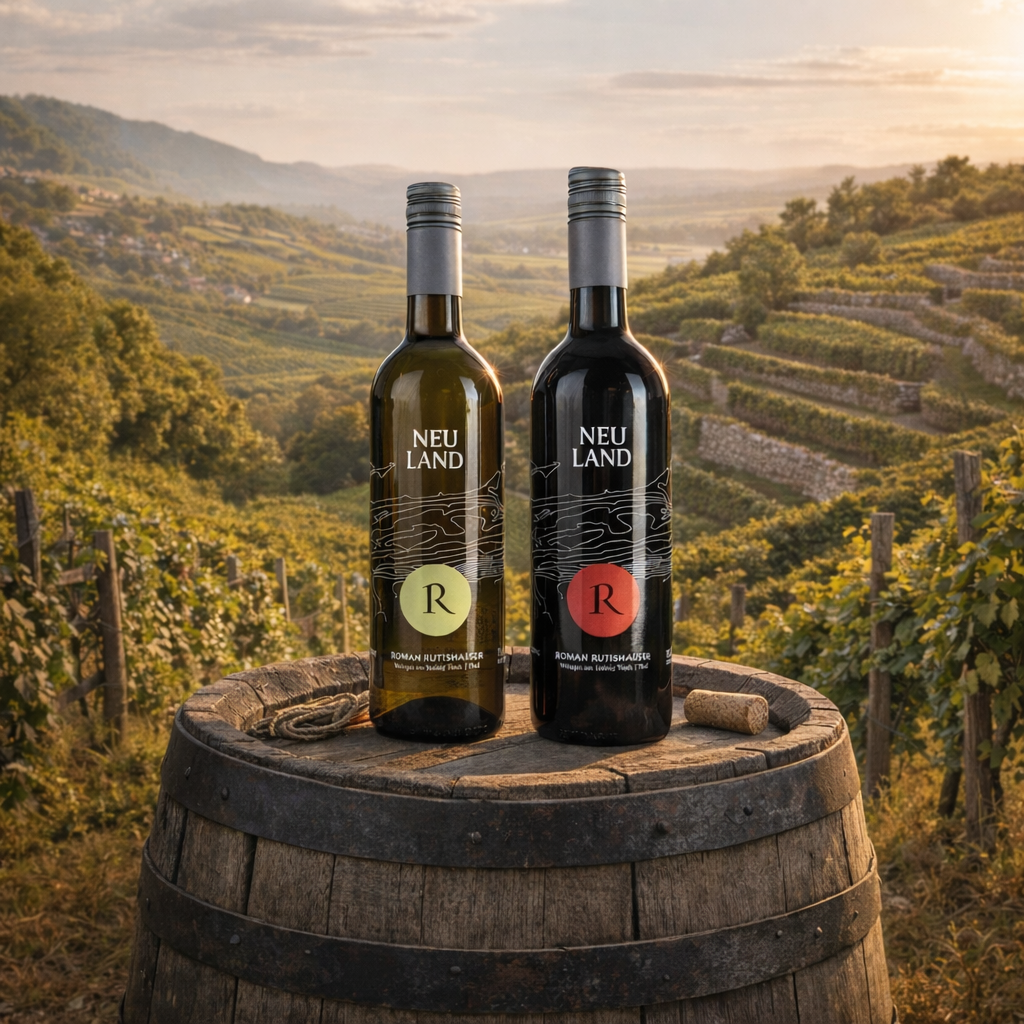
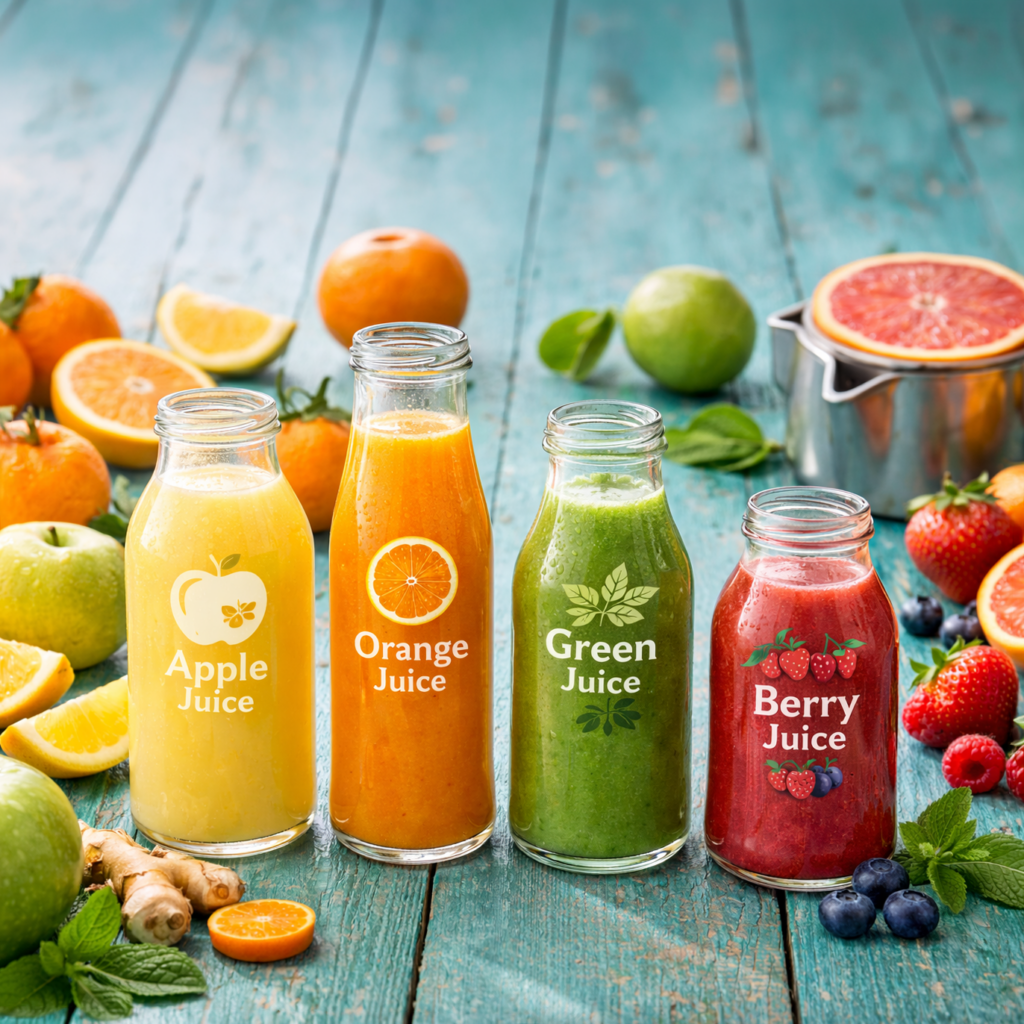
Screen printing on glass is a printing technique that combines artisanal expertise with industrial precision. It allows up to six colors to be applied directly onto the glass surface, including specific shades and precious metals such as gold or platinum, for a particularly refined finish.
Once applied, ceramic inks are vitrified at high temperatures, ensuring excellent adhesion and strong resistance to scratches, friction, and repeated dishwasher cycles.
This method is particularly suited for logos, precise typography, and visuals with clean lines, offering a premium finish with a subtle tactile effect that immediately enhances the bottle.
Digital Printing on Glass
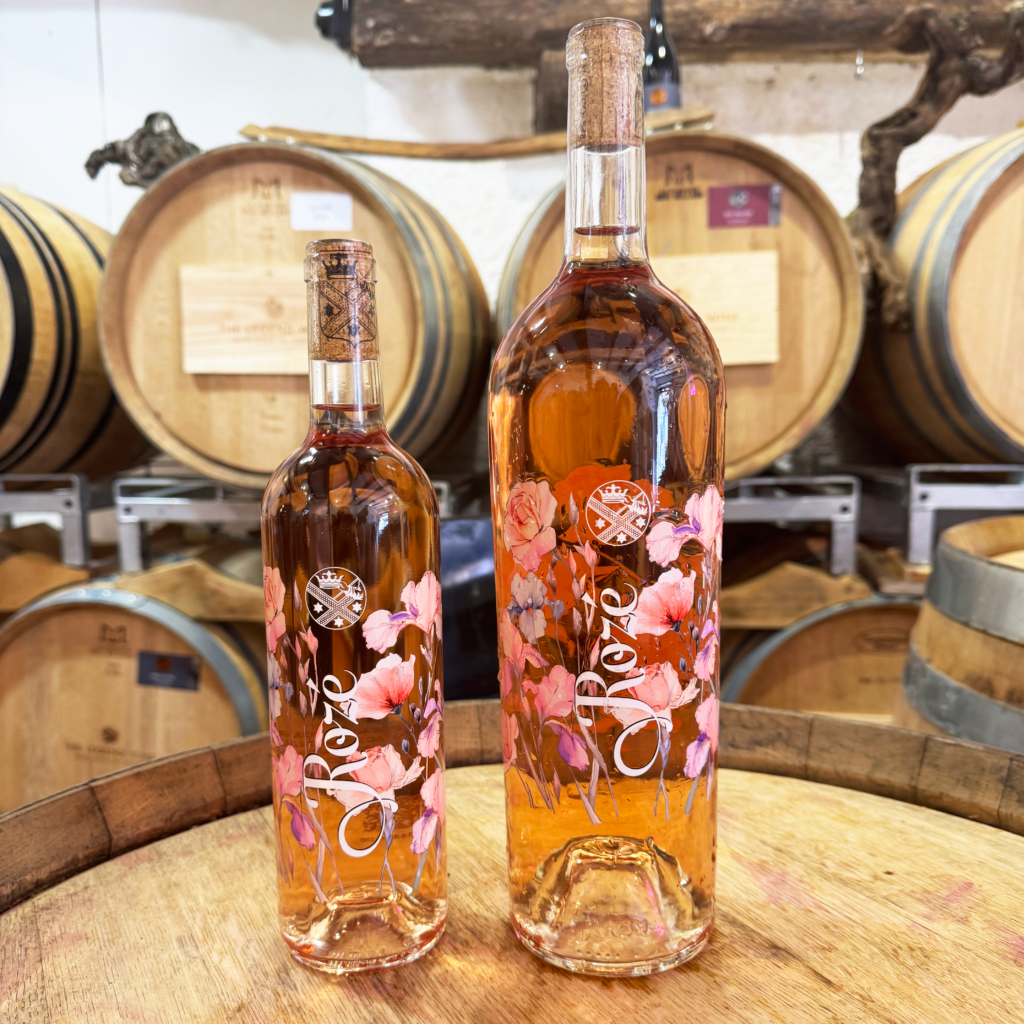
Digital printing on glass represents an innovative solution that significantly expands creative possibilities. With an almost unlimited color palette, it enables the faithful reproduction of delicate gradients, complex illustrations, or even photographs.
Unlike traditional methods, it requires no screens or plates, making it particularly suitable for small series, limited editions, or projects requiring personalized and variable visuals.
Logos, illustrations, event names, or specific designs can thus be produced with a professional, elegant, and durable finish — perfectly aligned with today’s market expectations.